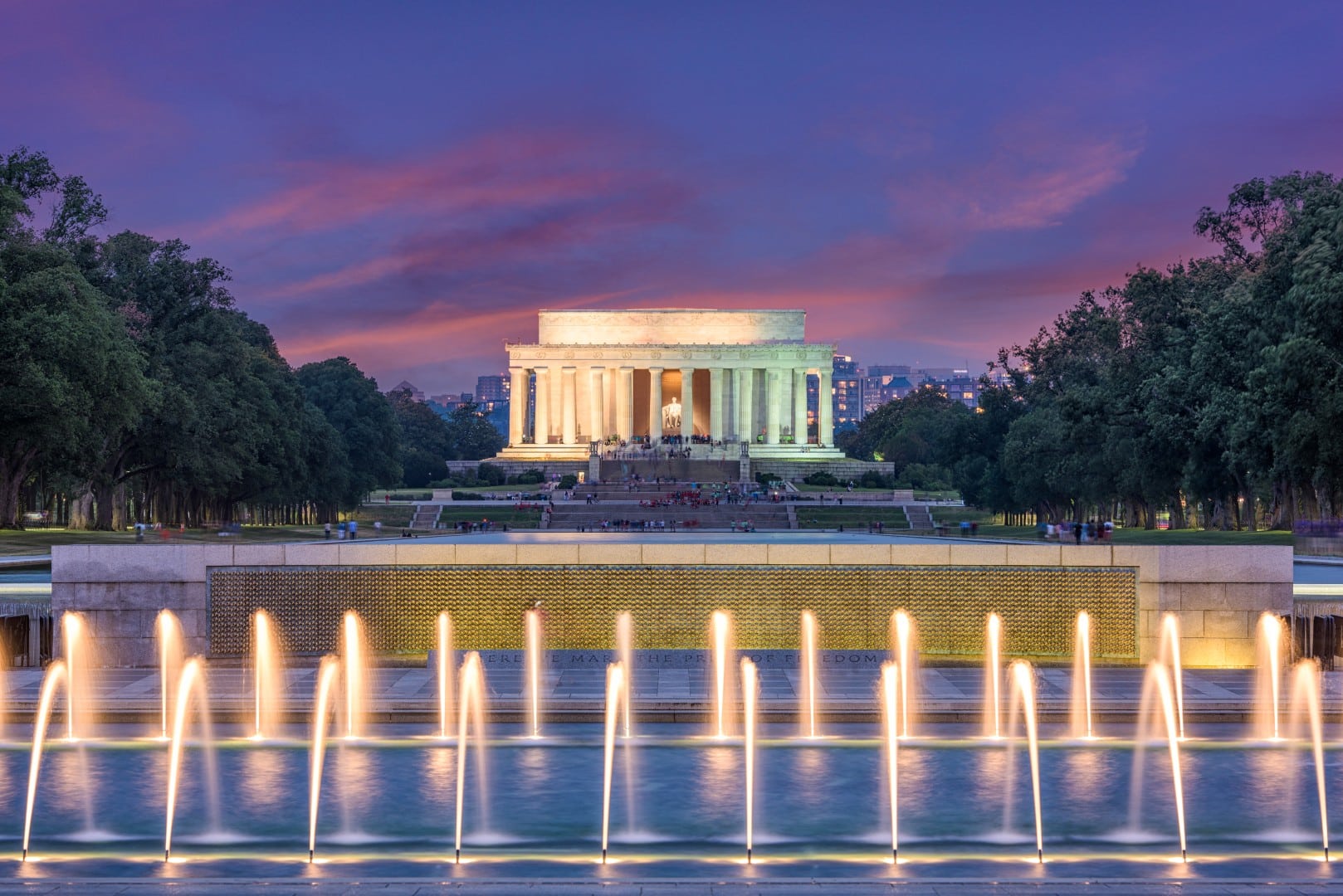
Building a Washington DC itinerary usually starts with a map of the National Mall and the assumption that the main landmarks sit close together. That assumption is wrong in a way that quietly ruins schedules. The Mall is nearly two miles from end to end, the museums are enormous, and the neighborhoods worth seeing are not on it. A plan that looks reasonable on paper has a way of collapsing by early afternoon when the distances become real.
The honest answer to how many days you need in Washington DC depends entirely on what you are willing to leave out.
A typical day involving a museum, a set of monuments, and a neighborhood for dinner covers 8 to 12 miles on foot. Visitors who do not account for this build itineraries the city’s geography quietly defeats. The landmarks that appear adjacent on a tourist map are separated by distances that compound faster than most schedules allow. Some visitors handle this with Metro and rideshare; others use a private city tour to move between sites without managing the transit gaps themselves.
The Metro covers the monument corridor well. The Smithsonian station on the Blue and Orange lines drops you at the center of the Mall, and Capitol South puts you at the foot of Capitol Hill. For the monuments on the western end, Foggy Bottom is the closest stop, though it is still a 15-minute walk to the Lincoln Memorial.
Georgetown, Dupont Circle, and the Tidal Basin memorials require either a rideshare or significant walking from the nearest Metro station. The system does not cover the full city, which means any Washington DC itinerary that includes neighborhoods alongside monuments will involve at least some combination of transit modes. Planning for that in advance is more useful than discovering it mid-afternoon.
With 1 day in Washington DC, the goal is monuments and one museum. The western Mall anchors the day: the Lincoln, Vietnam Veterans, and WWII memorials are walkable as a cluster. Choose a single museum and commit to it before you arrive. The National Air and Space Museum and the National Museum of Natural History each take two to three hours at a reasonable pace. Attempting both alongside the monuments means spending the afternoon in transit rather than looking at anything.
Two days allows you to divide the city into geographic halves so you stop backtracking. Keep Capitol Hill and the eastern Mall on one day (the Capitol Building requires advance reservation through the Capitol Visitor Center, free but heavily scheduled in spring and summer) and use the second day for the western monuments in the morning and a neighborhood in the afternoon. Georgetown and Dupont Circle are the most accessible neighborhood departures from the federal core for an afternoon away from the monuments.
A 3 day itinerary Washington DC first-timers build most often is where a visit stops feeling rushed. The third day is when the outlying landmarks become achievable. Arlington National Cemetery takes a dedicated morning: the Changing of the Guard at the Tomb of the Unknown Soldier runs on the hour from April through September and every two hours the rest of the year. The Holocaust Memorial Museum needs timed-entry passes and at least three hours. The Tidal Basin circuit (Jefferson, FDR, and MLK Jr.) is a separate trip that most people on shorter visits never reach.
The Tidal Basin circuit is best approached in the early morning or at dusk. Midday in July and August, the paths are fully exposed and temperatures regularly climb into the low 90s with high humidity. Planning it for midday on a summer trip is planning to be uncomfortable.
One of the best Washington DC travel tips before you plan anything else: the majority of things to do in Washington DC for free include some of the city’s most significant attractions. All 19 Smithsonian museums, every monument on the National Mall, the National Gallery of Art, the Library of Congress, and entry to Arlington National Cemetery cost nothing. The Holocaust Memorial Museum is also free, though timed-entry passes are required and should be reserved in advance. The Capitol Building tour is free, booked through the Capitol Visitor Center.
The main paid exceptions most visitors encounter are the International Spy Museum (around $25) and certain special exhibitions at individual museums. Are DC museums free? For everything under that umbrella, yes. That covers the bulk of what a first-time visitor plans to see. This makes budget less of a constraint than time and geography for most trips.
Four days is when DC stops being a checklist and becomes a city worth knowing. The 14th Street corridor, Shaw, and Columbia Heights have independent retail scenes and a restaurant culture that developed significantly over the last decade. Penn Quarter holds the National Portrait Gallery and the American Art Museum in a shared building that is free, rarely crowded, and consistently overlooked. Embassy Row along Massachusetts Avenue, Eastern Market on Capitol Hill, and the National Arboretum all take time and willingness to move well past the central core.
Most first-time visitors leave wishing they had one extra day. If your schedule allows, three days offers the best balance between the National Mall and the neighborhoods that give Washington its character. With four or more days, you can slow the pace and experience the city beyond its monuments.