Most couples get engaged and then realize their guest list outgrew their favorite little wedding spot. Good news: Washington, DC is well set up for a big celebration. This guide covers ten standout DC wedding venues, from thousand-guest halls off the National Mall to grand mansions on Embassy Row, with a focus on capacity, catering, access, and how guests get there.
| Venue | Type | Capacity (seated / standing) | Standout Feature | Stay on site? |
|---|---|---|---|---|
| Andrew W. Mellon Auditorium | Grand landmark | 650+ seated / up to 1,000 standing | Marble hall and Doric columns | No |
| Anderson House | Gilded Age mansion | 130 in one room, 180 across two / 250 standing | Embassy Row palace feel | No |
| Meridian House | Garden estate | Up to 150 seated indoors; confirm layout max | European gardens and linden grove | No |
| National Museum of Women in the Arts | Museum gallery | ~250 seated | Mezzanine over the Great Hall | No |
| National Building Museum | Monumental hall | Up to 2,000 total capacity | Colossal columns, gala-scale hall | No |
| The Hay-Adams | Luxury hotel | Up to ~200 | Rooftop White House views | Yes |
| Fairmont Washington, DC | Grand hotel | Wedding max advertised as 350 | Garden courtyard in the city | Yes |
| Capitol View at 400 | Modern rooftop | ~250 seated / 400 standing | Lit-up monuments, all-season glass | No |
| Perry Belmont House | Gilded Age mansion | Up to 150 on second floor; confirm standing | Marble staircase and crystal chandeliers | No |
| DAR Memorial Continental Hall | Historic marble hall | ~140 seated / 200 standing | Balcony over the monuments | No |
[Photo: Andrew W. Mellon Auditorium via eventsatmellon.com]
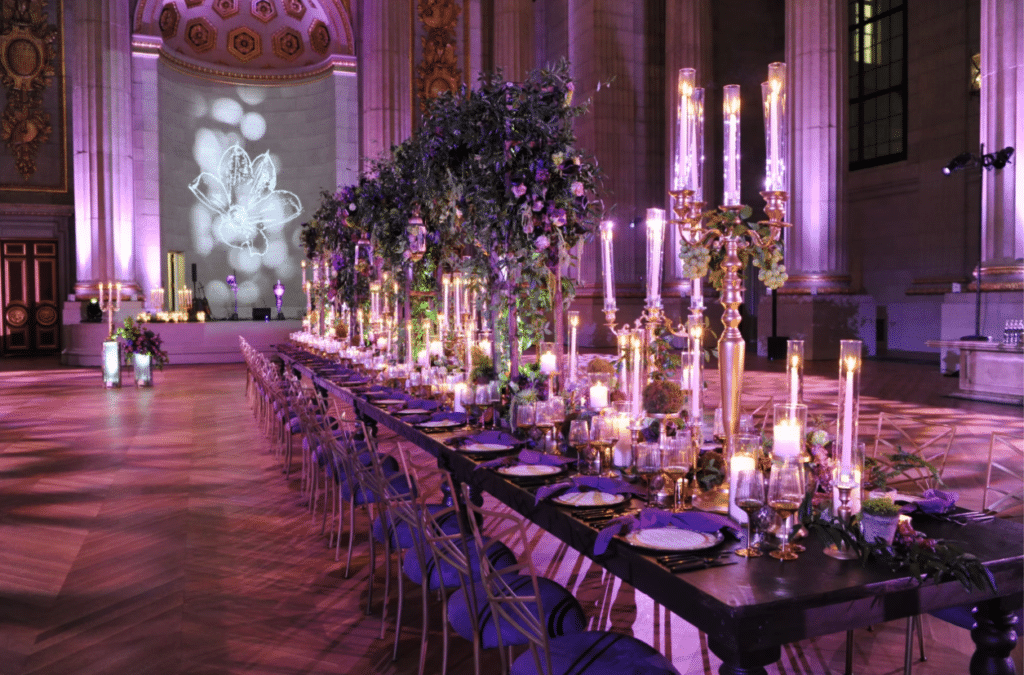
Opened in 1935 on Constitution Avenue near the National Mall, the Andrew W. Mellon Auditorium is one of the grandest interiors in the country. Six colossal fluted Doric columns, marble floors, and warm chandeliers give the Classical Revival hall a scale few DC spaces match. The Auditorium has a capacity of 650+ seated or up to 1,000 standing, plus smaller rooms, a foyer, and a covered outdoor deck. Ridgewells Catering manages the venue, so confirm which catering and vendor rules apply to your date. Set in the Federal Triangle, with Smithsonian museums and monuments nearby, it makes sightseeing easy. Most guests arrive on foot or by rail, so factor that into your timeline.
[Photo: Anderson House via societyofthecincinnati.org]
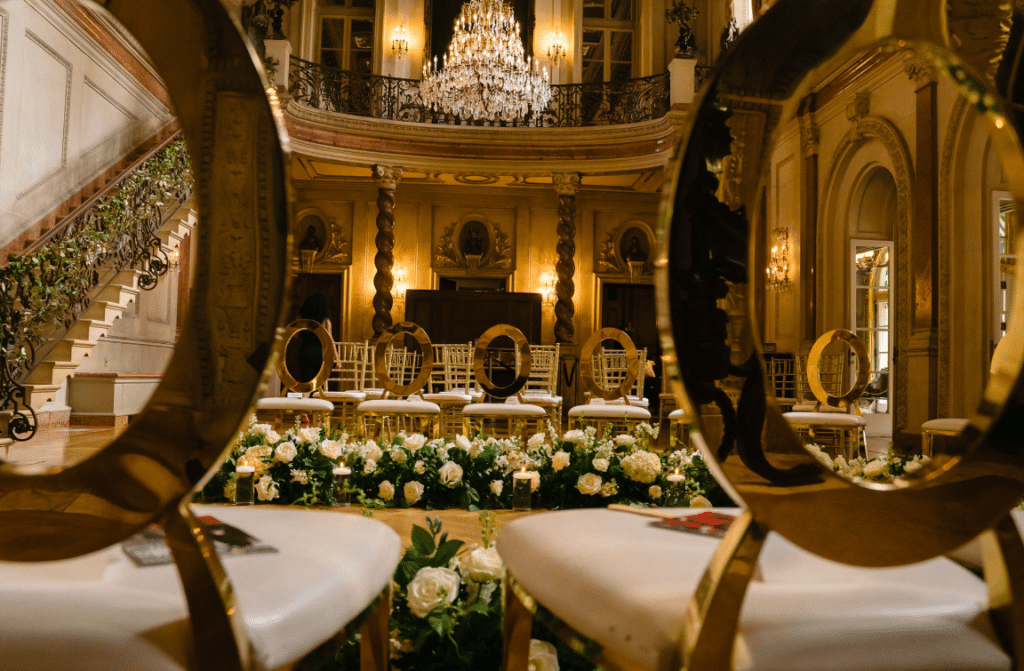
Constructed between 1902 and 1905 on Embassy Row in Dupont Circle, Anderson House is a Beaux-Arts mansion and National Historic Landmark, once the winter home of diplomat Larz Anderson and now headquarters of the Society of the Cincinnati. Marble, decorative galleries, a formal ballroom, and grand staircases fill the 50-room house. It seats up to 130 for dinner in one room, up to 180 across two, and standing receptions reach 250 across two floors, with the Ballroom’s floating staircase and musicians’ balcony at the center. It sits two blocks from the Dupont Circle Metro on the Red Line. Catering rules and capacity vary by room, so check the current guidelines with the Society.
[Photo: Meridian House via meridian.org]
Designed by architect John Russell Pope, who also gave the city the Jefferson Memorial and National Archives, Meridian House sits on Crescent Place near Meridian Hill Park. The 1919 residence and adjoining White-Meyer House form a full city block of historic gardens and refined interiors. Inside, the Library and Drawing Room together seat up to 150 guests. With two acres of gardens and the Linden Grove outside, check with the events team for the maximum capacity for your exact indoor-outdoor layout. The linden-tree courtyard and formal French garden give a distinctly European setting for outdoor ceremonies and garden receptions. Parking on this stretch of Northwest DC is tight, worth flagging to guests ahead of an evening reception.
[Photo: National Museum of Women in the Arts via nmwa.org]
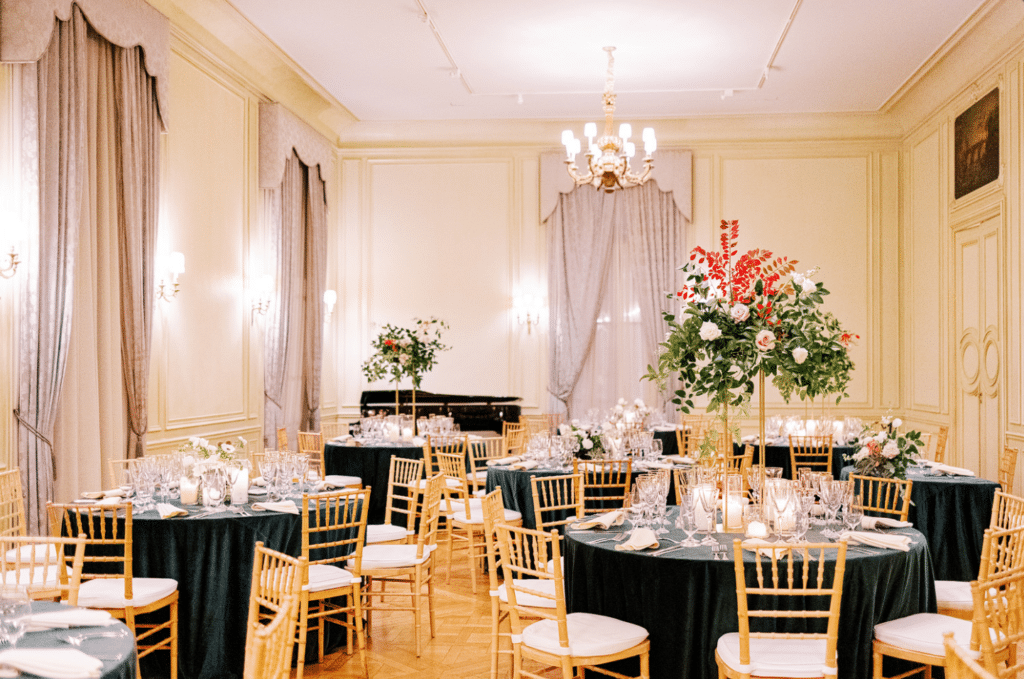
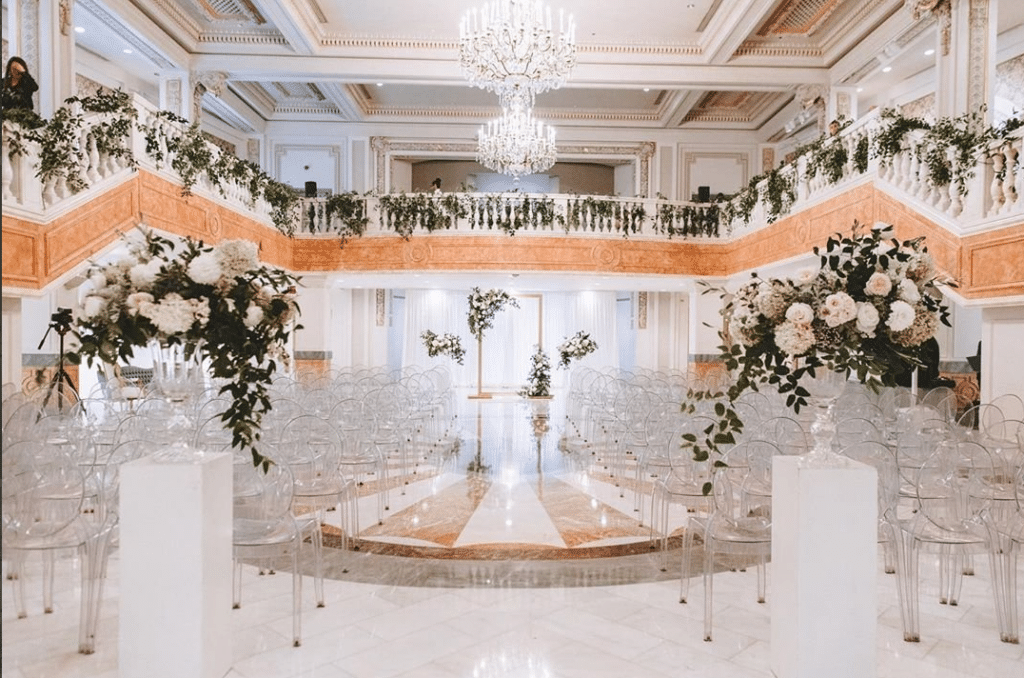
A short walk from Metro Center, the National Museum of Women in the Arts pairs a marble Great Hall with dazzling chandeliers and a sweeping mezzanine. Following its major renovation, the Great Hall, Mezzanine, and Third Floor Gallery combine to form a multi-part wedding layout that accommodates about 250 guests for a seated dinner. The mezzanine overlooks the Great Hall for an elevated view of the reception, and the downtown setting near several hotels helps when many of the partygoers are traveling in. Clarify the approved caterer list and rental terms when you inquire.
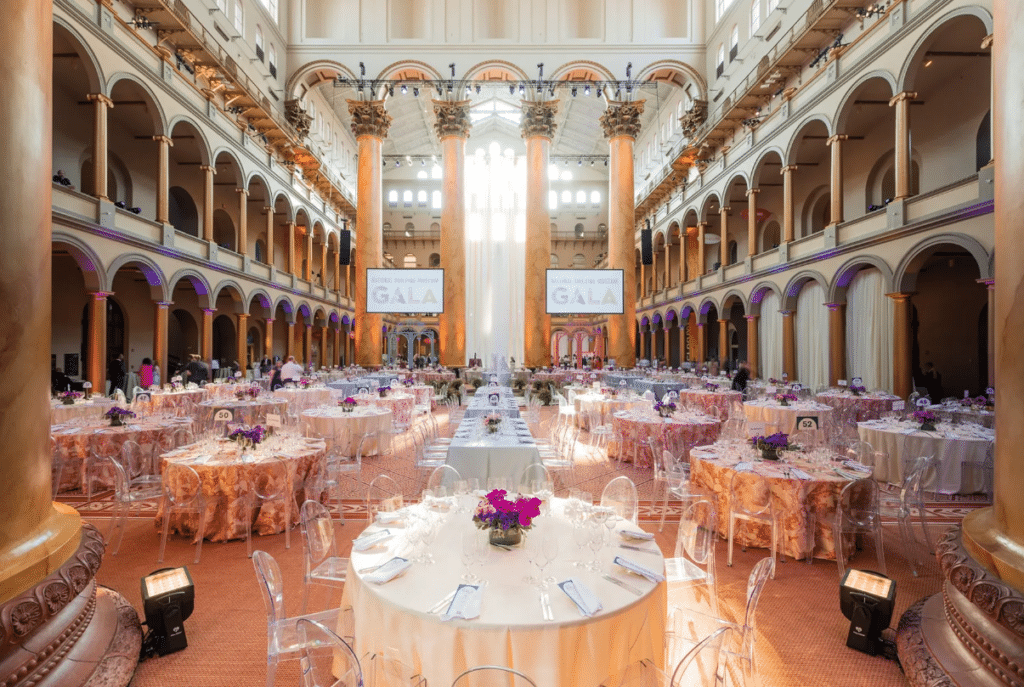
[Photo: National Building Museum via nbm.org]
The Great Hall of the National Building Museum is one of the most monumental interiors in Washington. Eight of the largest interior Corinthian columns in the world, each 75 feet tall, ring a soaring hall with a central fountain, holding up to about 2,000 guests. Near Judiciary Square and long associated with large-scale DC galas, it is one of the few venues on this list capable of an event at that scale. That scale also calls for careful planning around vendors, layout, and guest flow, so lean on the museum’s event team and add extra time into the timeline. The Judiciary Square Metro station sits close by.
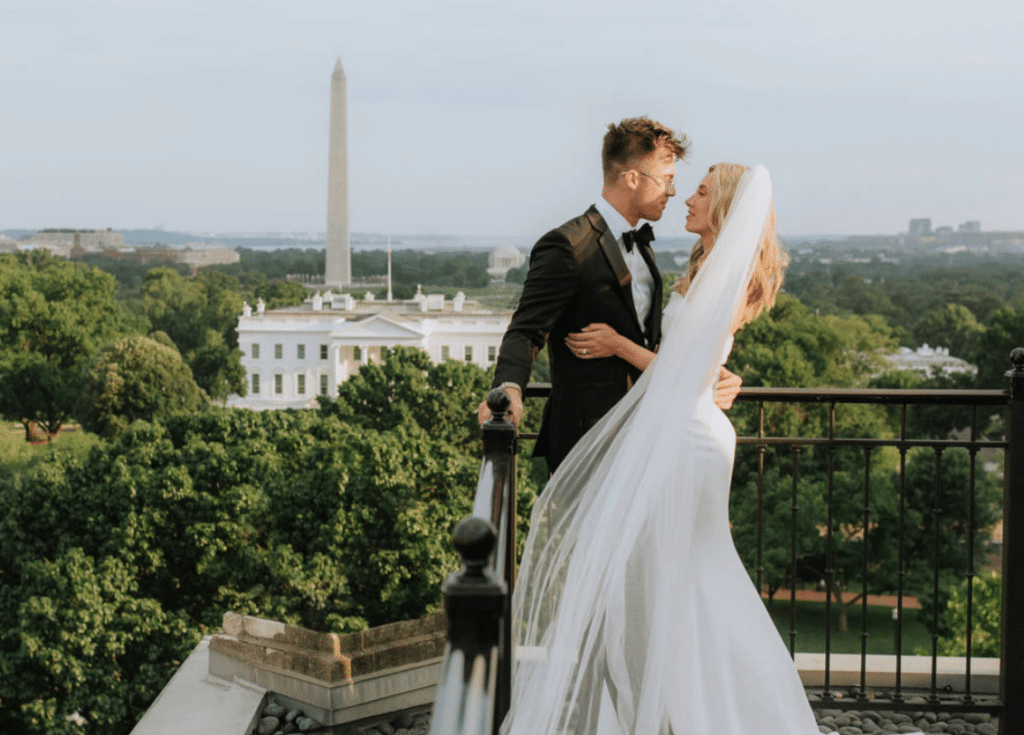
[Photo: The Hay-Adams via hayadams.com]
The Hay-Adams overlooks Lafayette Square, giving Top of the Hay direct views toward the White House and Washington Monument. The rooftop accommodates up to 200 guests for a seated dinner and reception, while on-site rooms make it practical for a guest list with many out-of-towners. In-house catering and a dedicated event team keep the moving parts under one roof, and a room block puts the reception and overnight stay at the same address.
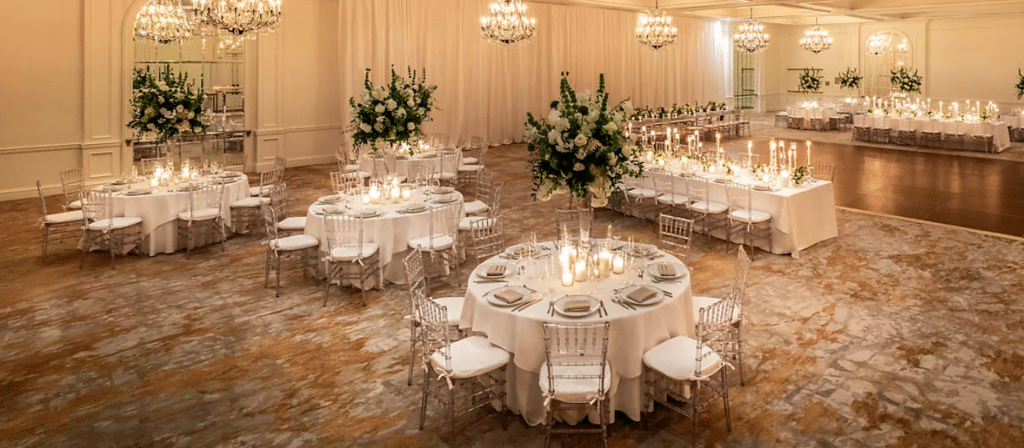
[Photo: Fairmont Washington via fairmont.com]
In the West End near Georgetown, the Fairmont Washington centers on a landscaped interior courtyard rare among city hotels, giving couples both indoor and outdoor options alongside full-service catering and hundreds of guest rooms under one roof. Fairmont advertises a maximum wedding capacity of 350, although its general room chart lists higher banquet numbers for some setups, including 440 in the Grand Ballroom. Verify with the wedding team the maximum that applies once the ceremony, dance floor, entertainment, and layout are included. Check room-block availability early, since demand runs high in peak season.
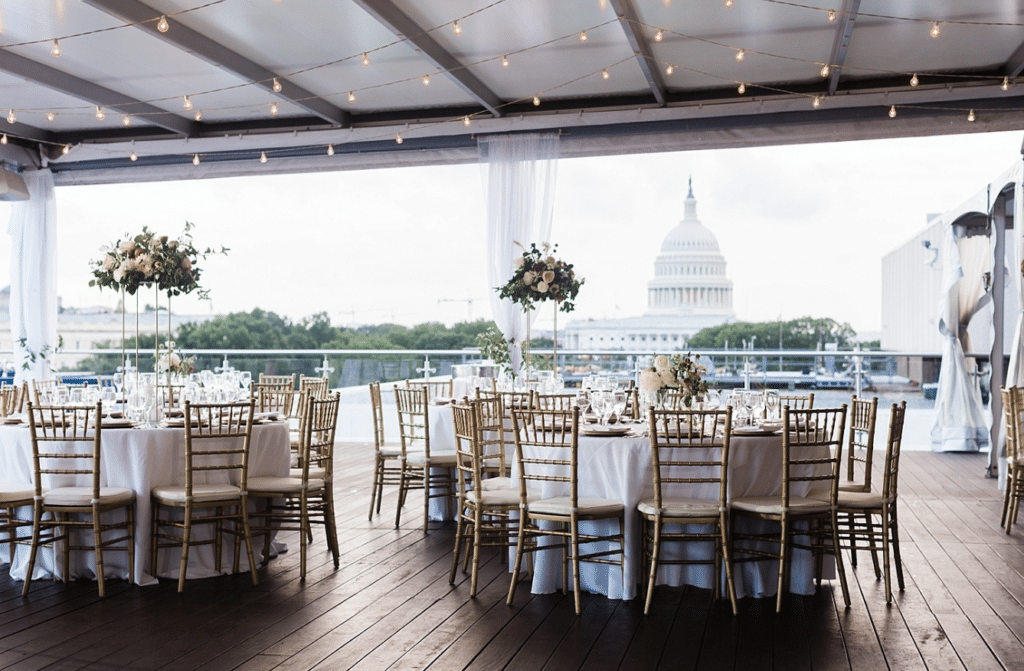
[Photo: Capitol View at 400 via capitolviewat400.com]
For couples who want the monuments in their photos, Capitol View at 400 delivers panoramic views of the Capitol dome, the Washington Monument, and Union Station from a 4,500-square-foot rooftop that seats up to 250 or accommodates up to 400 standing guests. Its enclosed rooftop gives more weather protection than an open terrace, so the views hold up when the forecast does not, and carry into the evening once the monuments light up. Two blocks from Union Station, with a garage in the building, it is one of the easier downtown spaces for guests to access, and it allows couples to choose their own vendors.
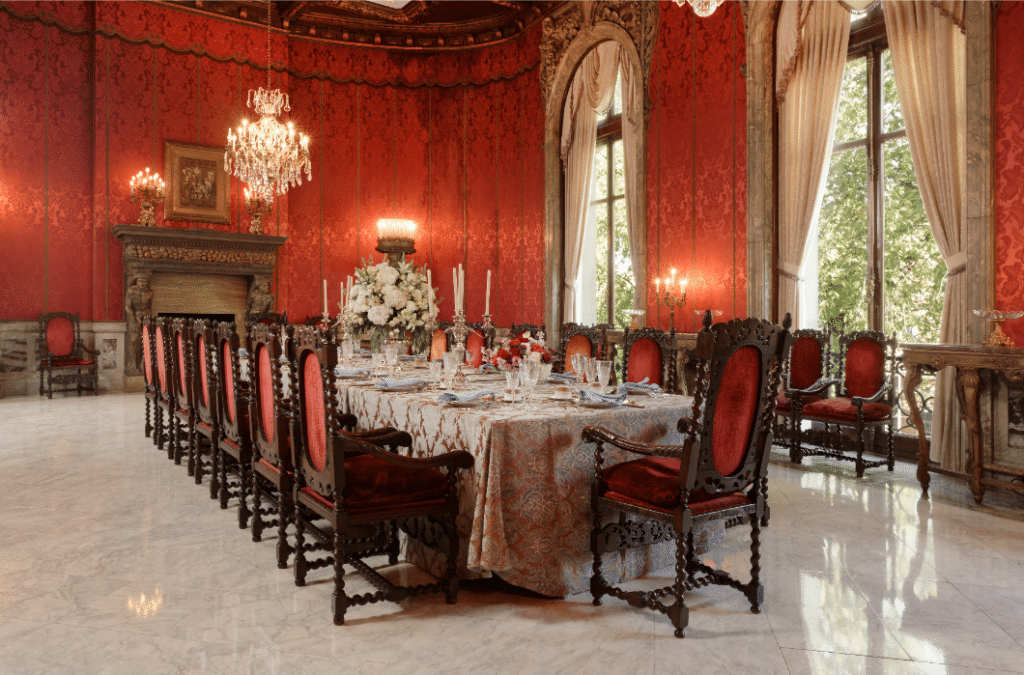
[Photo: Perry Belmont House via ihbelmontevents.com]
Designed in 1909 by French architect Eugene Sanson, the Perry Belmont House near Dupont Circle is a highly ornamented Beaux-Arts mansion. A double marble staircase, a 60-foot vaulted ceiling, gold-gilt chandeliers with hand-carved crystal, and eleven marble fireplaces give the interior a strongly decorative backdrop before florals or rentals. The venue’s own page lists a maximum of about 150 on the second floor, while third-party listings cite up to 200, standing-room-only; verify the exact room plan directly. Set on New Hampshire Avenue in a residential stretch, it has limited parking, so let guests know the plan in advance of an evening reception.
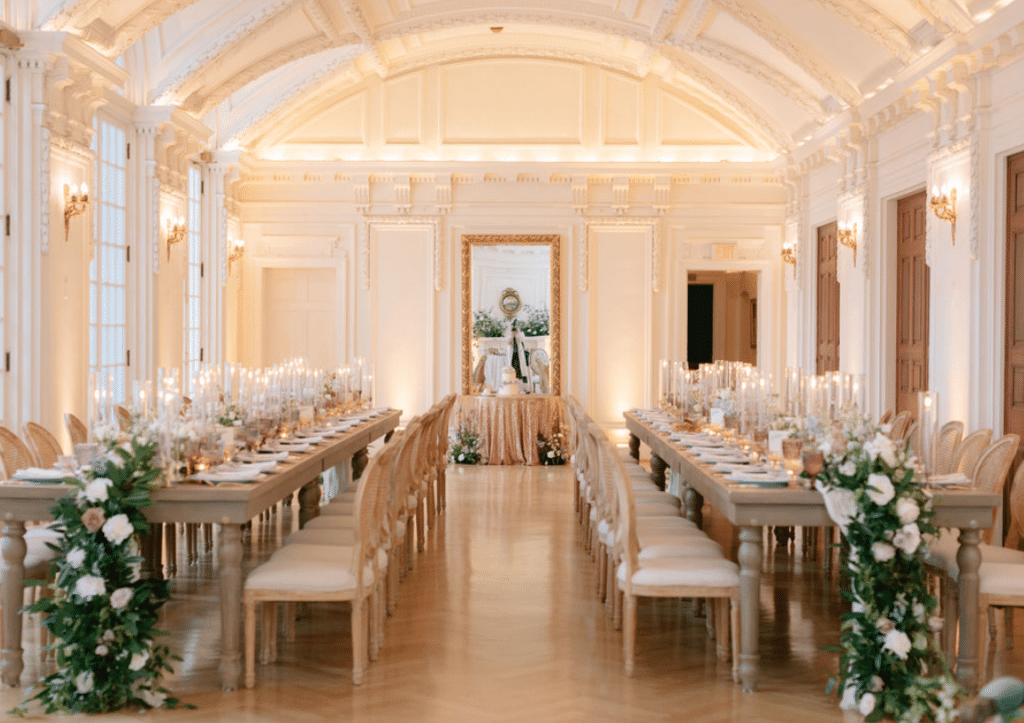
[Photo: DAR Memorial Continental Hall via dar.org]
Home to the Daughters of the American Revolution near the White House, the DAR private-event spaces sit inside Memorial Continental Hall, not the adjacent Constitution Hall, which DAR runs as the city’s largest concert hall. The main wedding room is the O’Byrne Gallery, 140 seated or 200 standing, with the Banquet Hall (100 seated, 180 standing), the gilded Pennsylvania Foyer for cocktails and dancing, and an outdoor Portico ceremony facing the Washington Monument. As of August 2026, the main DAR Library is under restoration and inaccessible, while the O’Byrne Gallery remains open. If a sample wedding layout references the Library, check with the events team which space replaces it for your date. Vehicle access and parking are tight here, so a heads-up to guests goes a long way for an evening reception.
The venue that looks best on a tour is not always the one that runs a wedding well. A few things to pin down before you sign:
· Get the seated-with-dancing number in writing.
A headline capacity of 500 may fall substantially once you add dinner tables, a dance floor, a stage, and production. The standing or fire-code figure is almost always higher than the real reception count, so make the venue commit to the true dinner-and-dancing figure.
· Check the getting-ready situation.
Historic venues do not always have purpose-built getting-ready suites. Find out whether there is a bridal suite or private room on-site, or whether the wedding party must arrive fully ready from the hotel.
· Find out what else is happening in the building.
Museums, hotels, and cultural institutions often run other activities at once. Check if visitors, other guests, another reception, or a performance will share entrances, elevators, restrooms, or loading areas during your wedding.
· Nail down the rain plan.
Garden-forward spaces like Meridian House and the Fairmont courtyard place more weight on indoor backup when the weather turns. Verify where the ceremony will move if it does, and make sure the space fits your full guest list.
· Plan how guests get there.
Parking varies widely by venue: some rely on nearby garages or rail service, while Capitol View has parking in the building and the hotels simplify parking for overnight guests. A little planning for how guests travel between the hotel and the ceremony reduces the chance that parking or drop-off delays push them past the ceremony start time, so settle the exact drop-off, garage, valet, or wedding transfer setup rather than assuming a downtown venue has none.
· Confirm the end-of-night rules.
Historic and residential-area venues often carry noise limits and hard curfews. Find out when the music has to stop and when the last guest has to be out before you plan the reception timeline.
The easiest way to narrow ten venues to three in Washington, DC is to stop comparing them when they are empty. Picture the actual wedding instead: 180 people seated for dinner, a dance floor in place, rain moving the ceremony indoors, out-of-town guests leaving their hotel at the same time, and everyone heading home when the music stops.
The right venue is the one that still works when all of those pieces are added.
Once the guest count, backup plan, access, and overnight arrangements make sense, you can make the final decision for a much better reason: which Washington backdrop do you want in the photographs twenty years from now?