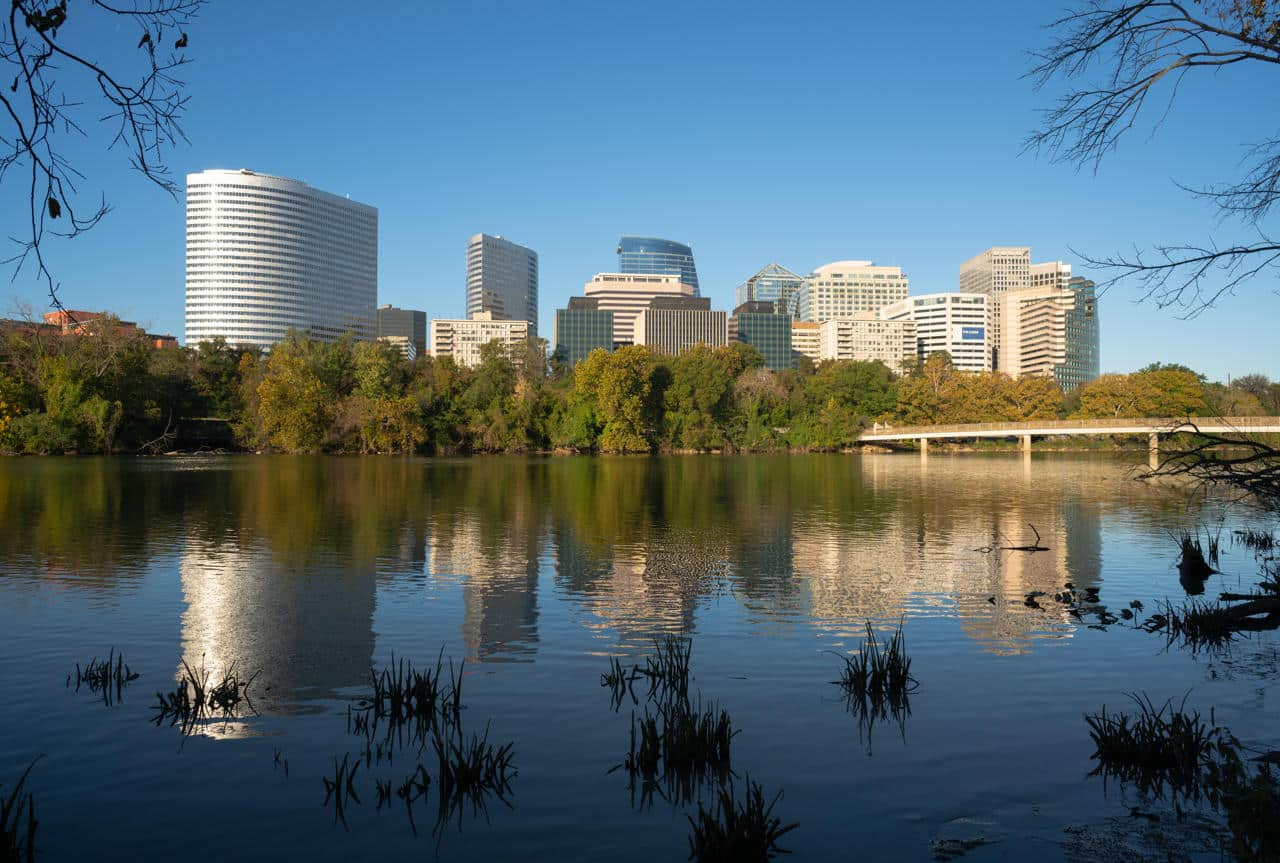
Alexandria has a lot of variety within a small area. A former torpedo factory on the waterfront holds artists’ studios you can walk into. An old pharmacy still keeps its original bottles and medical equipment. A building on Duke Street documents the far more difficult history of the domestic slave trade.
That makes deciding what to do in Alexandria, VA less about seeing the best-known names and more about choosing places that show different sides of the city.
Before filling either day, a few details make the city easier to understand.
| Good to know | Why it matters |
| Old Town is the main visitor hub | This district includes several major historic sites, galleries, shops, and the Potomac waterfront. |
| King Street is the street to follow | It runs east from King St-Old Town Metro toward Market Square and the river. |
| The King Street Trolley is free | It connects King St-Old Town Metro with City Hall/Market Square and normally circulates every 15 minutes. |
| Museum hours differ considerably | Several Historic Alexandria museums open only Thursday through Sunday, while others follow seasonal calendars. |
This two-day plan works best when both days fall between Thursday and Sunday, when the museums on this route are most likely to be open. Freedom House and the Athenaeum open only on those days, so move them to that part of the week if your dates start earlier. A few day-by-day notes help:
Start at the Torpedo Factory in the morning, then walk along King Street to browse its independent storefronts and stop for lunch.
In the afternoon, choose your museum tours before planning the rest of the day:
The Torpedo Factory Art Center occupies a former munitions plant at 105 N. Union Street and contains three floors of working artist studios. The building also houses The Art League Gallery and School. Admission to the art center is free, and it is open daily from 10 a.m. to 6 p.m., although individual artists set their own studio hours.
Unlike a conventional gallery, the center has no set route, and its studios may feature painting, ceramics, jewelry, printmaking, photography, or other media.
To get more out of the visit:
A few blocks away, the Stabler-Leadbeater Apothecary Museum preserves the shop of a family pharmacy business that began in 1792 and operated here from 1805 until 1933. Its displays include historic botanicals, pharmaceutical equipment, and old medicine containers.
The museum’s hours change with the season:
Only guided tours include the second floor, which makes them worth choosing:
Good fit if: objects and unusual commercial history interest you more than period furniture.
Gadsby’s Tavern Museum covers two tavern buildings dating to 1785 and 1792. Its exhibits go beyond famous patrons to show how taverns functioned in the early American republic.
Inside, see how public rooms and private spaces served different purposes: the buildings hosted dining, lodging, business meetings, and social gatherings.
Its open days also follow the season:
Guided tours last approximately 45 minutes and are scheduled at 1:15, 2:15, and 3:15 p.m. on applicable operating days. Check the museum’s calendar before booking, as availability may vary. Tickets are $8 per person for ages 5 and older, while self-guided admission costs $5 for adults and $3 for children ages 5 to 12.
Begin with a morning tour at Carlyle House, continue to Freedom House, and finish at the Athenaeum.
Freedom House is about a mile west of Carlyle House and the Athenaeum, so Day Two takes you away from the waterfront for part of the day. Decide ahead of time how you’ll get around Alexandria for that stretch to reach the Athenaeum before the gallery closes.
Carlyle House Historic Park centers on a stone mansion completed in 1753 for Scottish merchant John Carlyle. In 1755, British General Edward Braddock met with five colonial governors there to plan a campaign for the French and Indian War.
Its hours are:
Tours begin on the hour, and the final tour starts at 3 p.m. Admission is $8 for adults and $3 for ages 6 to 17, while children under 5 enter free.
At 1315 Duke Street, Freedom House occupies part of the former headquarters of Franklin and Armfield, once one of the largest domestic slave-trading firms in the United States.
According to the museum, traders trafficked tens of thousands of enslaved adults and children through this location between 1828 and 1861 before forcing them farther south. The museum presents three floors of exhibitions centered on that history and the people affected by it.
The museum shares these planning details:
Why place it on Day Two? By then you have already seen some of Alexandria’s commercial and civic history. Freedom House adds people and experiences that older interpretations of the city often marginalized.
The Athenaeum at 201 Prince Street makes a short final stop. Run by the Northern Virginia Fine Arts Association, it operates as an art gallery open Thursday through Sunday from noon to 4 p.m. with free admission.
The gallery’s exhibitions change throughout the year, while the Greek Revival building itself opened in 1852 as the Bank of the Old Dominion and served several other purposes before the arts association bought it in 1964.
Captain’s Row, the cobblestoned 100 block of Prince Street, ends at the corner where the Athenaeum stands, making it an easy walk to the gallery.
The Alexandria Archaeology Museum sits on the third floor of the Torpedo Factory and displays material from Alexandria’s archaeological record. Entry is free, but its hours differ from the art center’s, so check the museum calendar before you go up.
Alexandria has historical interpretation kiosks around King Street, Cameron Street, and the waterfront. They identify stories tied to the blocks around you, including the old port, the Apothecary, the Athenaeum, and other sites.
Read one when something on the street catches your attention.
Keep one hour of your two days unplanned. You might spend it talking with an artist at the Torpedo Factory, staying longer at a gallery than expected, or following a historic marker down a street you hadn’t planned to visit.